
Toyota Hilux Hyper-Z Concept Drops Bed Utility for Track Speed
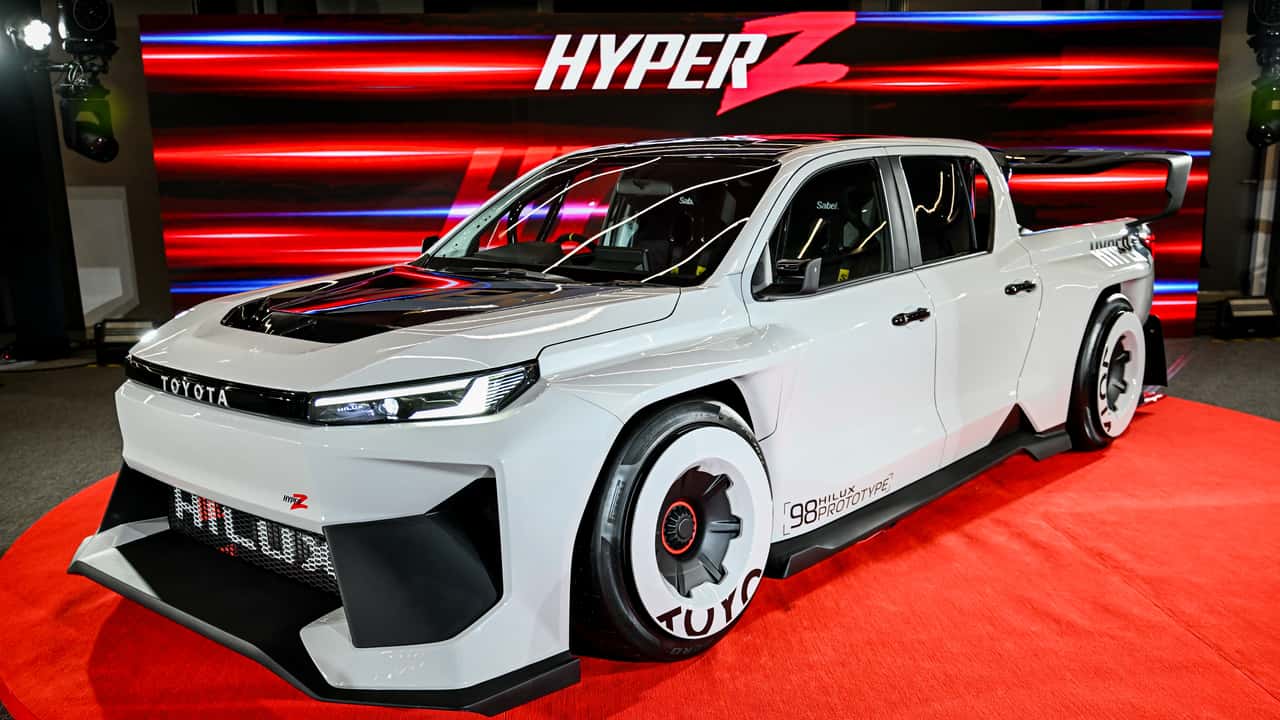
Toyota's engineering team in Thailand recently unveiled a project that completely defies standard pickup logic. The Toyota Hilux Hyper-Z is a radical, one-off project truck that rips up the conventional utility playbook. Built strictly as a low-slung, track-focused concept, this midsize vehicle trades off-road ground clearance and heavy payload ratings for aggressive aerodynamic downforce and circuit-honed chassis geometry.
Slammed Geometry: The Toyota Hilux Hyper-Z Chassis
Instead of riding high on heavy-duty suspension designed to clear boulders and haul tools, chassis engineers dropped this body-on-frame rig straight toward the asphalt. The track-focused stance relies on fully adjustable motorsport coilovers, recalibrated suspension pickup points, and wide-track performance tires wrapped around ultra-lightweight forged alloy wheels. Lowering a ladder-frame chassis this drastically requires serious mechanical overhaul; custom control arms and engineered steering linkages were mandatory to eliminate bump steer under hard cornering loads.
The exterior sheet metal dumps traditional plastic cladding in favor of functional carbon-fiber composite ground effects. A massive front splitter sweeps air under the chassis, while aggressive side skirts keep high-pressure air from bleeding beneath the floorboards. At the rear, an integrated bed cover works alongside a massive rear diffuser to clean up dirty trailing airflow—a persistent aerodynamic headache for open-bed pickups navigating high-speed sweepers.
Powertrain Realities and Track Upgrades
Underneath the vented performance hood, Toyota retained the core identity of the global Hilux platform while extracting maximum performance. The setup harnesses a tuned version of Toyota's turbodiesel engine, breathing through a high-flow intake track and venting through a short-pipe exhaust system routed out behind the front wheels. Aggressive ECU mapping forces significantly more boost through the variable-geometry turbocharger, delivering massive low-end torque to rocket the vehicle out of tight hairpin turns.
Power reaches the track surface exclusively through a rear-wheel-drive setup paired with a mechanical limited-slip differential. To tame the extra torque and control weight transfer, engineers fitted multi-piston performance brake calipers clamping onto large ventilated steel rotors. This braking setup offers the heat dissipation required to endure repeated hot-lap sessions without suffering from soft pedal travel or thermal fade.
Toyota Hilux Hyper-Z Specs Comparison
To see how drastically this concept deviates from standard production trucks, compare its track specs against a standard factory model:
| Feature / Metric | Standard Toyota Hilux (GR Sport) | Toyota Hilux Hyper-Z Concept |
|---|---|---|
| Body Style | Standard Double Cab Pickup | Slammed Aero-Tuned Track Truck |
| Suspension Setup | Heavy-Duty Leaf / Coil Springs | Adjustable Motorsport Coilovers |
| Drive Layout | Selectable 4WD System | Optimized Track Rear-Wheel Drive |
| Primary Focus | Towing & Off-Road Utility | Circuit Lap Times & Downforce |
| Brake Package | Standard OEM Disc / Drum | Multi-Piston Racing Calipers |
Utility Sacrificed for Downforce
If you expect to carry payloads or haul a trailer with this vehicle, you are missing the point entirely. Dropping the chassis to razor-thin ground clearance eliminates traditional utility. Dynamic payload ratings drop near zero due to ultra-stiff spring rates and fragile carbon-fiber splitters. Traversing standard speed bumps or uneven pavement demands extreme caution, making it completely unsuited for daily job-site duties.
However, throwing utility out the window unlocks dynamic performance that standard midsize trucks simply cannot replicate. Body roll is virtually eliminated. The dramatically lowered center of gravity allows the chassis to transition cleanly through high-speed S-turns without the severe weight transfer that plagues high-riding pickups. This is a focused engineering experiment showing what occurs when truck builders stop calculating payload capacities and focus purely on apex speeds.
Why Experimental OEM Builds Matter
Automakers often play it safe with conservative concept cars, making projects like this custom Hilux exceptionally fun to analyze. While Toyota has no production plans for this low-slung track vehicle, the custom fabrication work provides engineers with valuable real-world data regarding chassis rigidity and pickup aerodynamic behavior under extreme loads.
Beyond the technical data, it serves as a great reminder for car enthusiasts. Pickup trucks do not always need lift kits, knobby mud tires, or roof-mounted tents to be exciting. Sometimes the most entertaining vehicle on four wheels is a low-slung, rear-wheel-drive truck built to burn rubber, tackle race circuits, and completely ignore utility.