
Dodge Charger Evolution (1966–2026): Every Generation Ranked
The Complete Dodge Charger Evolution (1966–2026): From 426 HEMI Legend to Twin-Turbo Sixpack
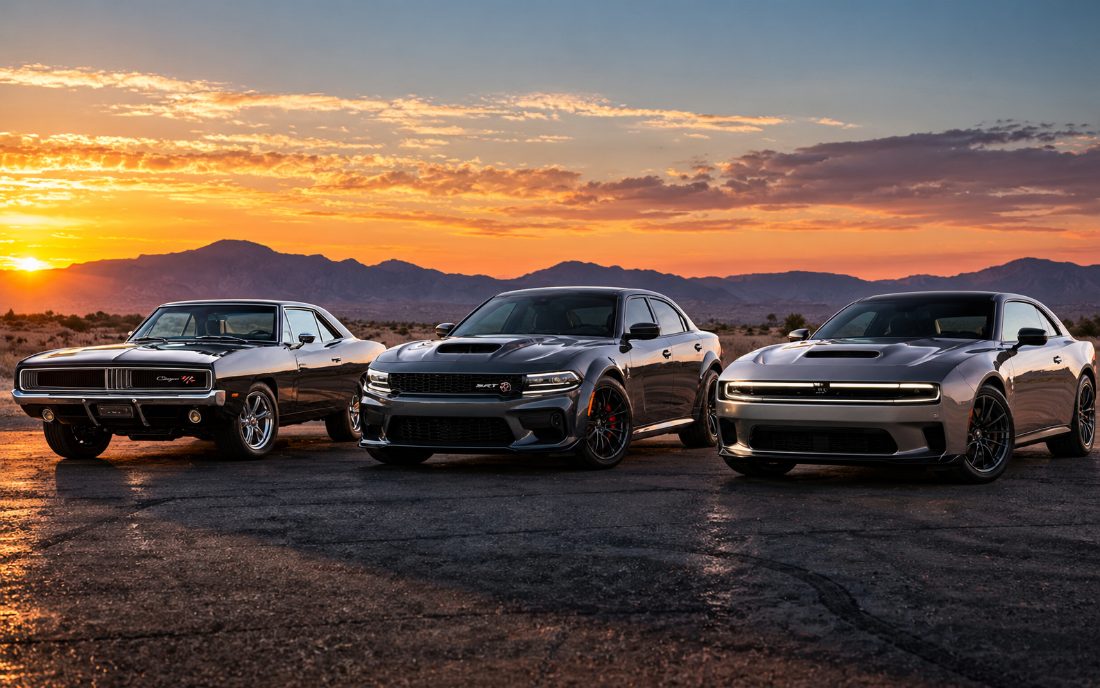
Very few cars in automotive history have died and come back as many times—or in as many bizarre shapes—as the Dodge Charger.
Over sixty years, the Charger nameplate has been slapped onto a sweeping 1960s fastback, a 200-mph NASCAR winged monster, a bloated 1970s personal luxury coupe, a front-wheel-drive 1980s economy hatchback, a fire-breathing four-door family sedan, and most recently, a nearly three-ton electric coupe.
Through every triumph and misstep, the Charger has mirrored the exact anxieties and ambitions of the American car buyer. Here is the unfiltered story of how one badge evolved across eight wildly different generations.
1. First Generation (1966–1967): The Fastback Experiment
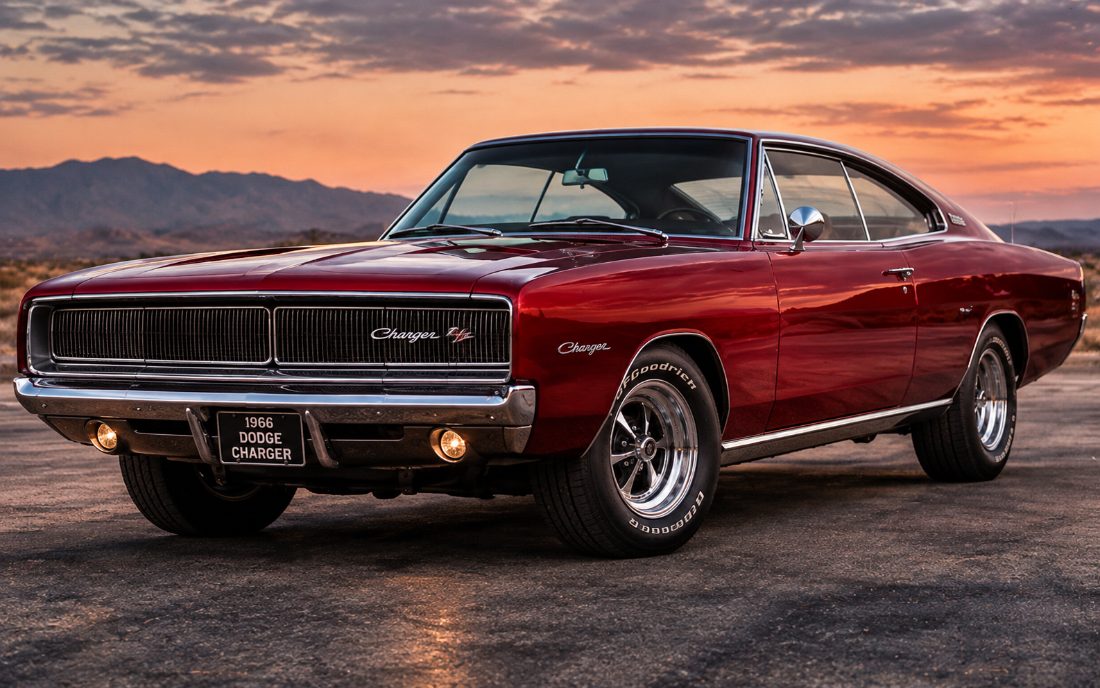
In the mid-1960s, Ford's Mustang and AMC's Marlin proved Americans wanted sleek, sporty fastbacks. Dodge responded mid-way through 1966 by stretching its mid-size Coronet B-body chassis into something far more theatrical: the original Charger.
Its signature party trick was a full-width front grille with vacuum-operated rotating hidden headlights, paired with an interior featuring four individual bucket seats and a folding rear console. Underneath the long hood sat V8 options ranging from a modest 318 cubic-inch engine all the way up to the mythical 426 cubic-inch (7.0L) HEMI V8 rated at 425 horsepower.
2. Second Generation (1968–1970): The Golden Era & NASCAR's Winged Warrior
When people picture a classic Dodge Charger—whether flying over dirt roads in The Dukes of Hazzard or doing wheelstands in Fast & Furious—they are picturing the 1968–1970 second generation.
Chrysler designers tossed out the awkward fastback glass for a sculpted "Coke-bottle" profile, dual scalloped doors, and recessed tunnel-back rear glass. Sales exploded from 15,788 units in 1967 to over 96,000 in 1968.
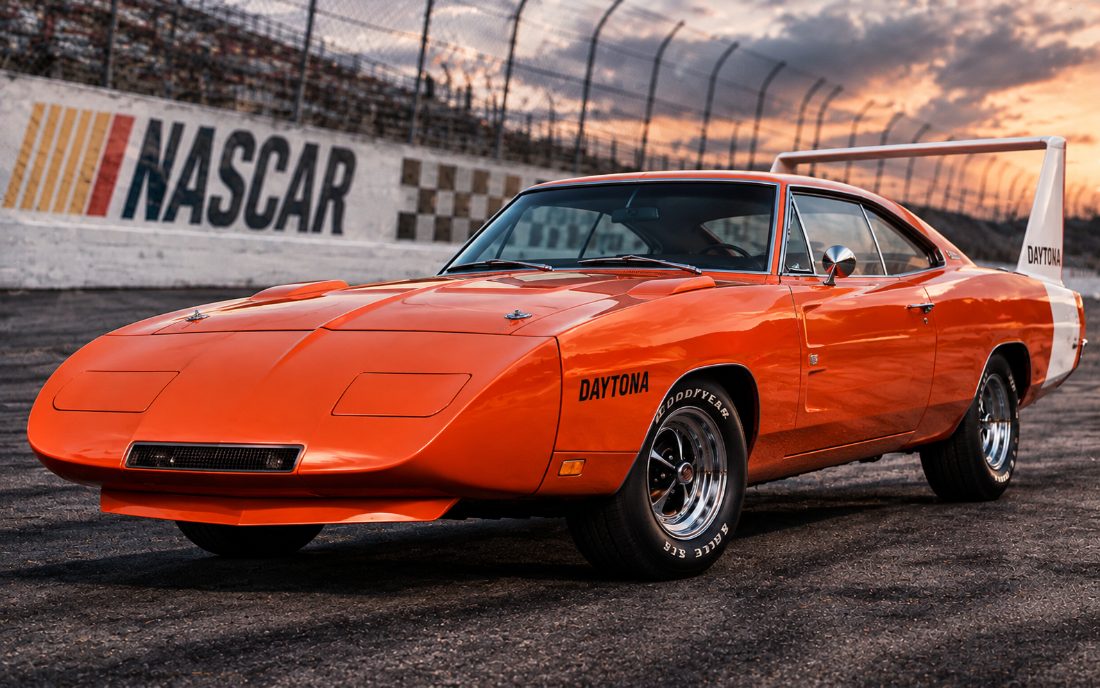
Then came 1969, and Dodge lost its collective mind in the best possible way. To conquer NASCAR's high-banked superspeedways, engineers bolted an aerodynamic pointed nose cone and a towering 23-inch rear wing onto the car, creating the 1969 Charger Daytona. Driven by 440 Magnum and 426 HEMI power, it became the first stock car to officially break 200 mph on a closed circuit.
3. Third Generation (1971–1974): Fuselage Styling Meets the Emissions Wall
For 1971, Dodge introduced rounded "fuselage" styling and split grilles, giving buyers the option of the sporty Super Bee trim or luxury-leaning SE grades. Early 1971 models still packed the 426 HEMI and 440 Six Pack.
Unfortunately, the party ended overnight. Skyrocketing muscle car insurance premiums, federal emissions mandates, and the 1973 OPEC oil crisis strangled horsepower ratings year by year. The HEMI vanished after 1971, and by 1974, the Charger was more cruiser than bruiser—mirroring the industry-wide collapse of the classic HEMI V8 era.
4. Fourth & Fifth Generations (1975–1987): The Dark Years
If you want to make a Mopar purist wince, mention the late 1970s and 1980s.
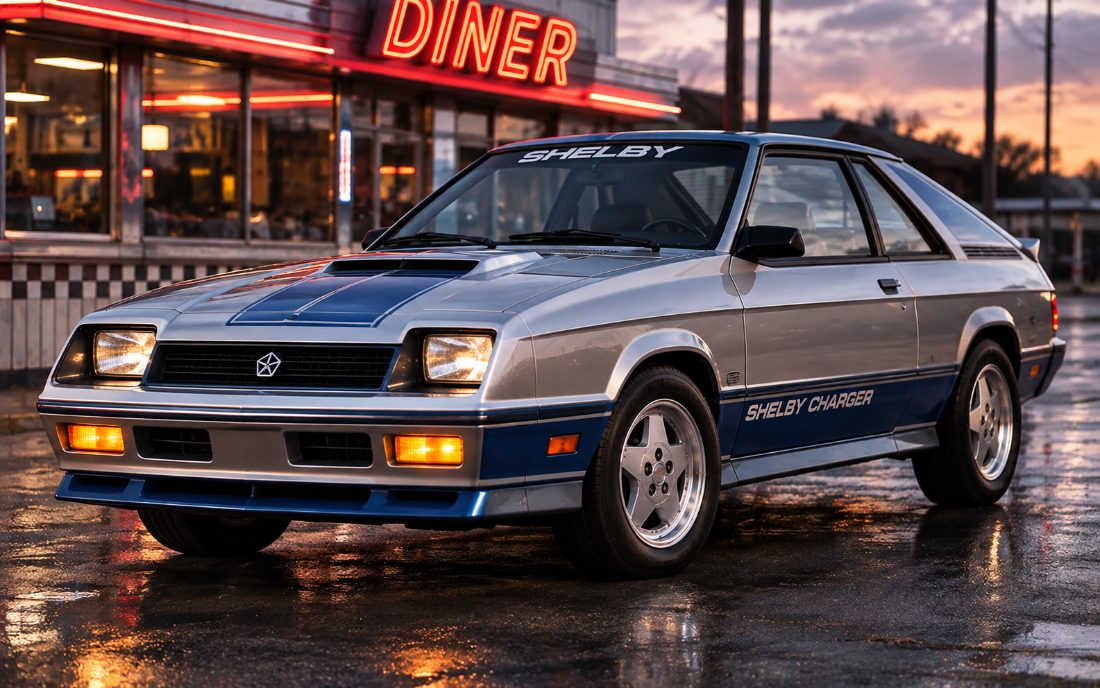
From 1975 to 1978, the fourth-generation Charger became a heavy, chrome-laden personal luxury coupe—essentially a rebadged Chrysler Cordoba with anemic, smog-choked V8s. After a brief disappearance, Dodge resurrected the name again in 1981 on the Chrysler L-body subcompact platform.
Yes, the fifth-generation Charger was a tiny, front-wheel-drive four-cylinder hatchback. While Carroll Shelby squeezed respectable handling and turbocharged pep out of the mid-1980s Shelby Charger variants (pushing up to 175 horsepower in the GLHS), enthusiasts refused to forgive the loss of rear-wheel-drive V8 thunder. The nameplate quietly died in 1987.
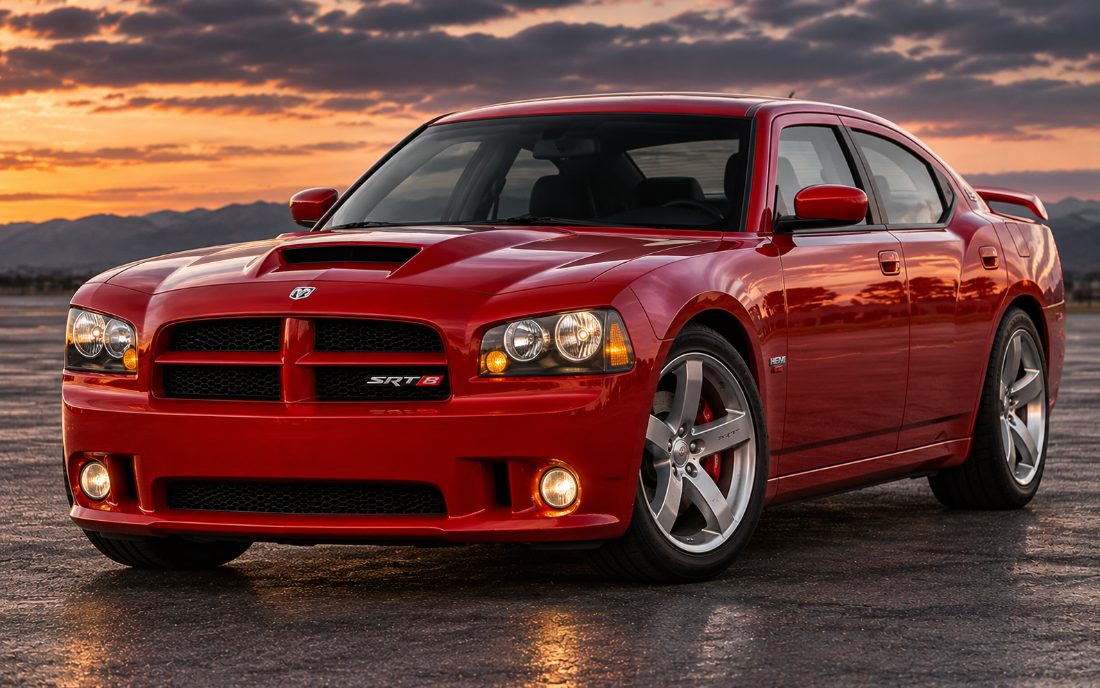
5. Sixth Generation (2006–2010): The Controversial Four-Door Revival
Nearly two decades later, Dodge shocked the Detroit Auto Show by reviving the Charger for 2006—with four doors.
Purists initially screamed heresy. Why would a two-door muscle legend return as a family sedan? Riding on Chrysler's rear-wheel-drive LX platform (shared with the Chrysler 300), the 2006 Charger silenced critics the moment drivers turned the key.
Under the hood sat the reborn 5.7-liter HEMI V8 (340–368 hp) in R/T models, topped by a brutal 6.1-liter HEMI V8 pumping out 425 horsepower in the SRT8. Suddenly, American dads could haul car seats all week and embarrass sports cars at the drag strip on Saturday night.
6. Seventh Generation (2011–2023): The Hellcat Era
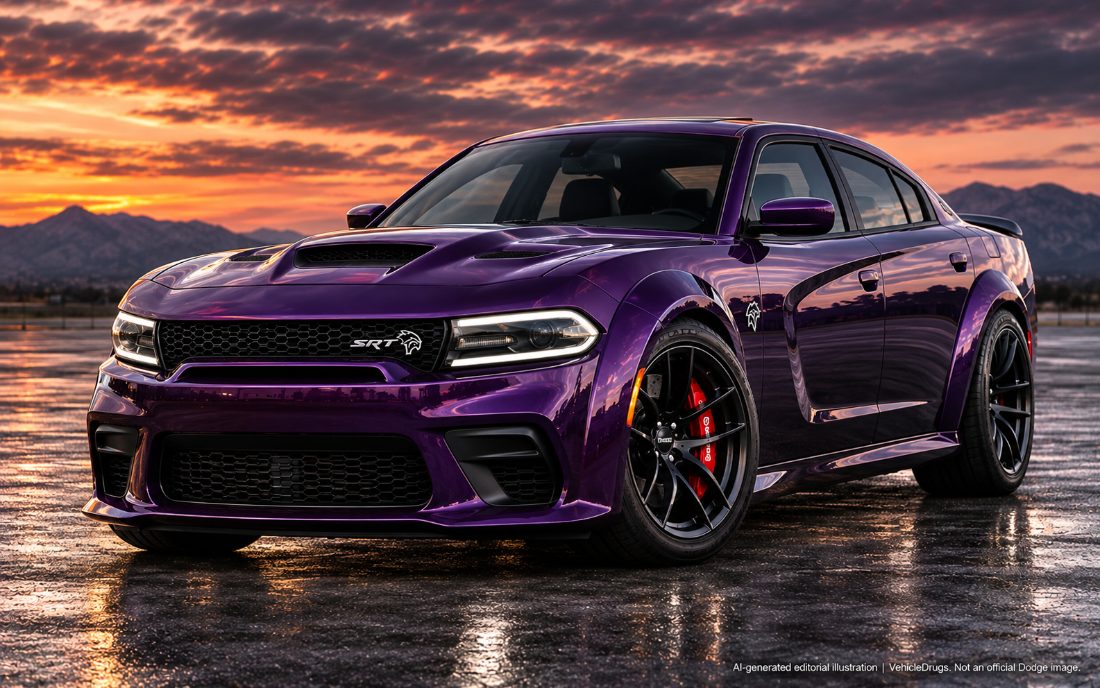
Refined for 2011 with aggressive coke-bottle side scallops and a full-width "racetrack" LED taillight bar honoring the 1968–1970 classics, the seventh-generation Charger became the undisputed apex predator of American sedans.
First came the 485-hp 392 Scat Pack. Then, for 2015, Dodge dropped a nuclear bomb on the industry: the Charger SRT Hellcat.
Powered by a supercharged 6.2-liter HEMI V8 making 707 horsepower (later escalating to 717 hp, 797 hp in the Redeye, and 807 hp in the Jailbreak), the Hellcat was a 200-mph, tire-shredding lunatic with four doors and a factory warranty. As Car and Driver noted throughout its decade-long run, nothing else on earth offered that much unhinged supercharger whine per dollar—right up until the final Last Call models rolled out in late 2023.
7. Eighth Generation (2024–2026): Electric Daytona & The Gas Sixpack
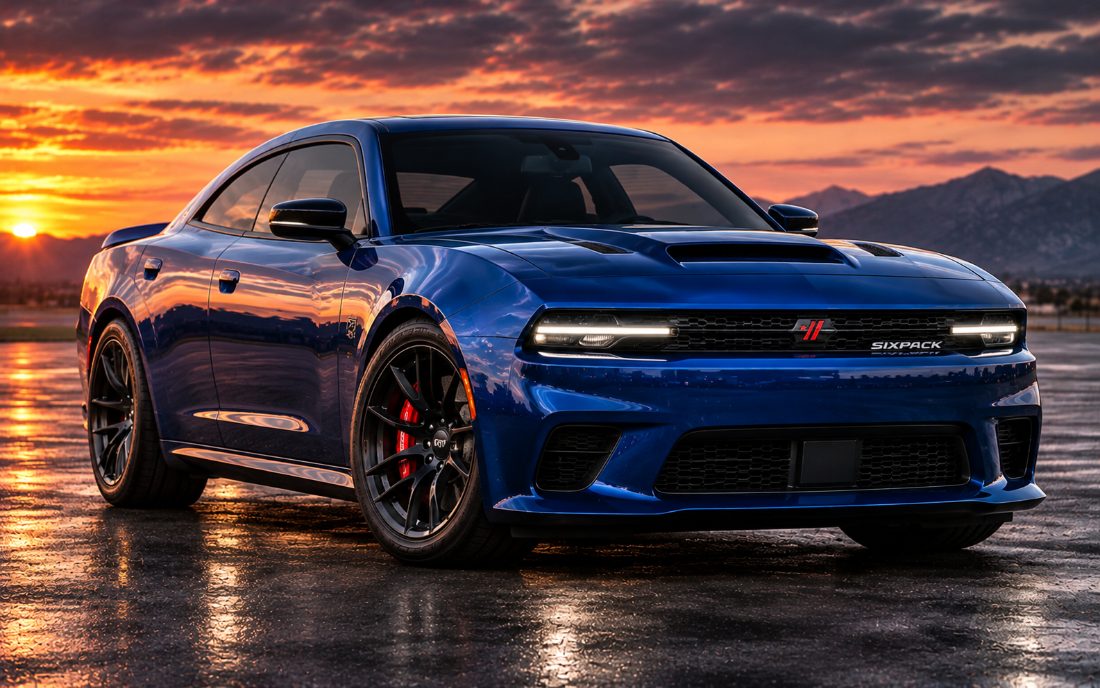
Following the retirement of the HEMI V8, Dodge reinvented the Charger once again on Stellantis's STLA Large platform—returning to a sleek two-door fastback silhouette (alongside a four-door option) with a practical hidden rear hatchback.
Dodge initially bet on the all-electric Charger Daytona EV, boasting up to 670 horsepower and a 126-decibel Fratzonic Chambered Exhaust speaker. However, a 5,800-pound curb weight and $61,590+ starting price triggered severe sticker shock, forcing dealers to slash prices and pushing Dodge to postpone the entry-level Daytona R/T EV.
Fortunately, internal combustion returned in the form of the 2026 Dodge Charger Sixpack—housing a 3.0-liter twin-turbocharged Hurricane inline-six making 420 hp (R/T at $49,995) and 550 hp (Scat Pack at $54,995), complete with standard AWD and a push-button 100% rear-wheel-drive burnout mode. It is a transition we analyzed closely in our breakdown of how the Sixpack rewrote Dodge's muscle car rules.
Dodge Charger Evolution at a Glance (1966–2026)
| Generation | Years | Body Style | Signature Engine / Peak HP |
|---|---|---|---|
| 1st Gen | 1966–1967 | 2-Door Fastback (B-Body) | 426 HEMI V8 (425 HP) |
| 2nd Gen | 1968–1970 | 2-Door Coupe (Daytona Wing) | 426 HEMI / 440 Magnum (425 HP) |
| 3rd Gen | 1971–1974 | 2-Door Fuselage Coupe | 426 HEMI (1971) / 440 Six Pack |
| 4th & 5th Gen | 1975–1987 | Luxury Coupe & FWD Hatchback | 2.2L Turbo I4 (175 HP in Shelby GLHS) |
| 6th Gen | 2006–2010 | 4-Door RWD Sedan (LX) | 6.1L HEMI V8 SRT8 (425 HP) |
| 7th Gen | 2011–2023 | 4-Door RWD Sedan (LD) | 6.2L Supercharged Hellcat (807 HP) |
| 8th Gen | 2024–2026 | 2-Door & 4-Door Liftback | Daytona EV (670 HP) / 3.0L Sixpack (550 HP) |
VehicleDrugs Editorial Take: Why the Charger Never Truly Dies
If history teaches us anything about Dodge, it is never to count the Charger out. Every time critics declared the nameplate dead—in 1978, in 1987, and again after the 2023 HEMI farewell—it mutated into whatever wild form was needed to survive the decade.
Today, rumors continue swirling around a potential future V8 return as enthusiasts push back against silent electric performance. Whether powered by a 426 HEMI, a supercharged Hellcat, or a twin-turbo straight-six, one rule remains unchanged: the Dodge Charger refuses to be boring.
Frequently Asked Questions
What was the most iconic Dodge Charger generation?
Most enthusiasts consider the second generation (1968–1970) to be the most iconic era, thanks to its Coke-bottle styling, the legendary 426 HEMI engine, the 1969 Charger Daytona NASCAR racer, and starring roles in Bullitt and The Fast and the Furious.
When did the Dodge Charger become a four-door sedan?
Dodge reintroduced the Charger as a four-door rear-wheel-drive sedan for the 2006 model year (sixth generation) on the Chrysler LX platform, reviving HEMI V8 performance for modern families.
What powers the 2026 Dodge Charger?
The eighth-generation Charger lineup offers both the all-electric Charger Daytona (up to 670 hp) and the gas-powered Charger Sixpack featuring a 3.0-liter twin-turbocharged Hurricane inline-six making 420 hp (R/T) or 550 hp (Scat Pack).
Sources & References
- Historical Specifications & Platform Archives: Dodge Official Heritage / Stellantis North America Media
- Generation-by-Generation Testing & Reviews: Car and Driver / Cars.com